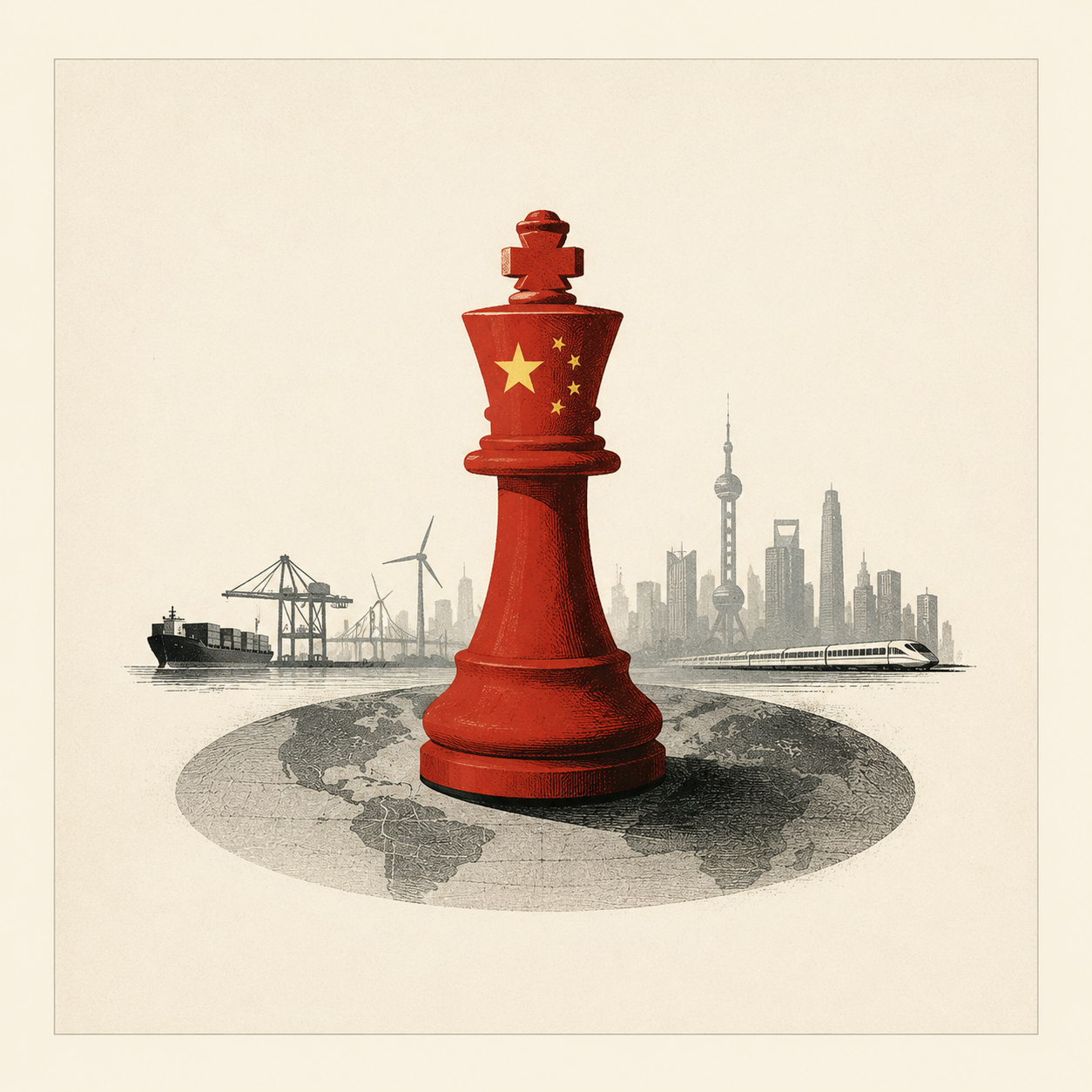
Why Strategic Chokepoints Matter More Than Ever
Analysis → Big Picture
For decades, globalization was built on a simple assumption: goods would move freely, efficiently, and cheaply across the world.
Companies optimized supply chains, manufacturers outsourced production, and consumers benefited from lower prices. The system appeared resilient, predictable, and increasingly interconnected.
Yet recent years have exposed a fundamental weakness in that model.
A handful of strategic chokepoints—narrow waterways, key ports, and critical maritime corridors—have become some of the most important locations in the global economy. Events occurring in a relatively small geographic area can now influence energy prices, shipping costs, inflation, and financial markets across multiple continents.
As geopolitical tensions rise and governments rethink economic security, understanding these chokepoints is becoming essential for investors, policymakers, and businesses alike.
Why Chokepoints Matter
A chokepoint is a narrow route through which a significant amount of global trade must pass.
Unlike traditional economic centers, their importance is not determined by population or GDP. Instead, their value comes from geography.
When trade flows smoothly, most people never think about these locations. When disruptions occur, however, their significance becomes impossible to ignore.
A temporary delay can affect global supply chains. A prolonged disruption can alter trade routes, increase costs, and create economic uncertainty far beyond the region itself.
The modern economy depends on movement. Chokepoints determine how efficiently that movement occurs.
The Strait of Hormuz
Few locations illustrate this reality better than the Strait of Hormuz.
Positioned between the Persian Gulf and the Gulf of Oman, it serves as one of the world’s most critical energy corridors.
A significant share of global oil and liquefied natural gas exports passes through this narrow waterway every day.
Because many major energy producers rely on the strait for exports, any disruption immediately attracts the attention of traders, governments, and investors.
Even the perception of risk can influence energy markets.
Oil prices often react not only to actual disruptions but also to concerns about future supply stability.
The importance of Hormuz extends beyond the Middle East. Its influence reaches financial markets, transportation networks, and industrial economies around the world.
The Red Sea and Suez Canal
Another critical trade corridor connects Europe and Asia through the Red Sea and the Suez Canal.
This route dramatically reduces shipping times compared with alternative paths around Africa.
For container shipping, energy products, manufactured goods, and raw materials, the canal remains one of the most important gateways in global commerce.
Recent disruptions have demonstrated how quickly shipping patterns can change when security concerns emerge.
Longer routes increase fuel consumption, insurance costs, and delivery times.
Ultimately, those costs often flow through to businesses and consumers.
What happens in a narrow shipping corridor can eventually influence inflation thousands of miles away.
The Rise of Economic Security
Governments increasingly view trade routes through a strategic lens.
The focus is no longer solely on efficiency.
Resilience has become equally important.
Many countries are now pursuing policies designed to diversify supply chains, strengthen domestic industries, and reduce dependence on critical external infrastructure.
This shift reflects a broader trend toward economic security.
Policymakers recognize that supply chains are not merely commercial systems. They are strategic assets.
As a result, trade, energy, and national security are becoming more closely connected.
The Cost of Concentration
Globalization delivered substantial economic benefits, but it also created concentration risks.
Manufacturing capacity became concentrated in specific regions.
Energy exports became concentrated through specific routes.
Critical components became dependent on a limited number of suppliers.
The result is a system that is highly efficient but often less resilient.
Businesses are increasingly evaluating whether lower costs justify greater vulnerability.
Many are choosing diversification over pure efficiency.
While this transition may increase short-term costs, it could reduce long-term risks.
What Investors Should Watch
For investors, chokepoints offer valuable insights into future market trends.
Changes in shipping activity, energy flows, infrastructure investments, and geopolitical tensions can all influence asset prices.
Monitoring these developments can help identify opportunities and risks before they become widely recognized.
Key indicators include:
- Shipping volumes
- Freight rates
- Energy exports
- Port activity
- Infrastructure investment
- Regional security developments
These factors increasingly shape global economic outcomes.
The Future of Global Trade
Globalization is not ending.
Trade volumes remain enormous, and international commerce continues to support economic growth worldwide.
However, the nature of globalization is changing.
The next phase is likely to prioritize resilience alongside efficiency.
Governments, businesses, and investors are paying greater attention to supply chain security, strategic infrastructure, and geographic vulnerabilities.
In this environment, chokepoints will become more important rather than less.
The world economy may be digital, interconnected, and increasingly advanced, but it still depends on physical routes that connect producers, consumers, and markets.
Understanding those routes may prove to be one of the most valuable forms of intelligence in the decade ahead.
The Bottom Line
Global trade often appears abstract when viewed through economic statistics and market data.
In reality, it depends on a relatively small number of strategic locations.
The Strait of Hormuz, the Suez Canal, major ports, and critical shipping corridors are no longer just geographic features. They are economic assets that influence markets, energy security, and global growth.
As geopolitical competition intensifies and supply chains evolve, the importance of these chokepoints is likely to increase.
For businesses, investors, and policymakers, understanding the geography of trade may become just as important as understanding the economics behind it.