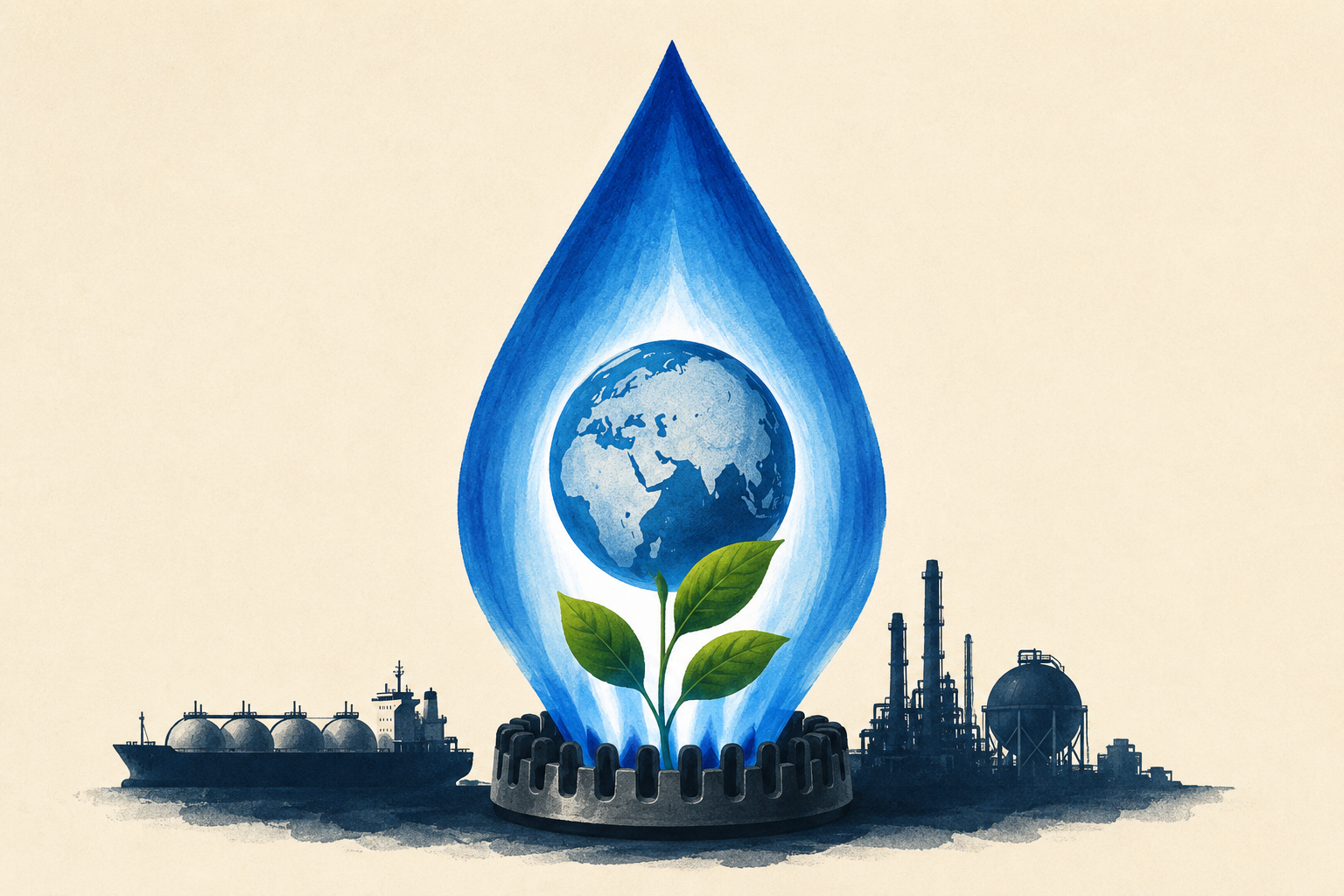
Why Natural Gas Is Quietly Becoming the World’s Most Important Transition Fuel
Energy → Natural Gas
As governments seek reliable energy, lower emissions and economic growth at the same time, natural gas is emerging as one of the defining commodities of the 21st century.
For much of the past decade, the global energy conversation has been dominated by two themes: the decline of fossil fuels and the rise of renewable energy. Solar panels, wind farms and electric vehicles have become symbols of the energy transition, attracting billions of dollars in investment and capturing public attention around the world.
Yet beneath the headlines, another energy source has been quietly reshaping global markets.
Natural gas has become one of the most important fuels in the modern economy. It powers homes, supports industrial production, generates electricity and increasingly serves as a bridge between traditional energy systems and a lower-carbon future.
While oil remains the world’s most influential commodity, natural gas is becoming equally important in determining how countries manage energy security, economic growth and environmental objectives.
The question is no longer whether natural gas matters. The question is how important it will become during the coming decades.
Why Natural Gas Matters
Every modern economy depends on reliable energy.
Factories require constant electricity. Cities need heating and cooling. Transportation networks rely on fuel. Data centers powering the digital economy consume enormous amounts of energy every day.
Renewable energy sources have expanded rapidly, but they face one persistent challenge: intermittency.
Solar panels do not generate electricity at night. Wind farms depend on weather conditions. Large-scale battery storage remains expensive in many markets.
Natural gas fills this gap.
Gas-fired power plants can rapidly increase or decrease output depending on demand, making them ideal partners for renewable energy systems. This flexibility explains why many governments continue to invest heavily in gas infrastructure even while pursuing ambitious climate goals.
For policymakers, natural gas is often viewed as a practical compromise between energy security and emissions reduction.
The Global Demand Story
Global demand for natural gas has expanded significantly over the past two decades.
Several powerful trends continue to support consumption:
- Population growth
- Urbanization
- Industrial development
- Rising electricity demand
- Economic expansion in emerging markets
Asia remains one of the most important growth engines.
Countries such as China and India continue to increase energy consumption as their economies expand and living standards improve. As governments attempt to reduce dependence on coal, natural gas has become an attractive alternative.
The Middle East is also investing heavily in gas production and infrastructure. Meanwhile, Europe continues to view natural gas as a critical component of its energy mix despite accelerating investments in renewable energy.
This combination of developed and developing market demand creates a strong foundation for long-term consumption.
The LNG Revolution
Perhaps no development has transformed the natural gas industry more than liquefied natural gas.
Historically, gas markets were regional.
Countries imported natural gas primarily through pipelines, creating long-term dependencies between suppliers and consumers.
LNG changed everything.
By cooling natural gas to extremely low temperatures, producers can convert it into a liquid and transport it across oceans using specialized tankers.
This innovation has created a global marketplace.
A cargo produced in the United States can be shipped to Europe. Gas exported from Qatar can supply Asian buyers. Australian LNG can support demand across multiple regions.
The result is a more flexible energy system capable of responding to changing market conditions.
LNG has effectively done for natural gas what containerization did for global trade: it connected previously isolated markets into a global network.
The Strategic Importance of Energy Security
Energy security has returned to the center of policymaking.
Recent years have demonstrated how vulnerable economies can become when energy supplies are disrupted.
Whether caused by geopolitical tensions, infrastructure failures, sanctions or conflicts, disruptions can have immediate consequences for businesses and consumers.
Natural gas occupies a unique position within this environment.
Unlike some renewable technologies, gas infrastructure already exists at scale. Unlike oil, natural gas often serves domestic electricity generation and industrial production directly.
Governments increasingly view gas supply diversification as a strategic priority.
Countries are investing in:
- LNG terminals
- Storage facilities
- Pipeline networks
- Long-term supply agreements
These investments are not simply economic decisions. They are national security decisions.
The Geopolitics of Natural Gas
Few commodities illustrate the connection between energy and geopolitics more clearly than natural gas.
Major exporters include:
- United States
- Qatar
- Australia
- Norway
Major consumers include:
- China
- Japan
- South Korea
- European countries
As a result, gas trade influences diplomatic relationships, investment flows and strategic partnerships.
Competition for market share among exporters has intensified. At the same time, importing countries seek greater supply diversity to reduce dependence on individual suppliers.
Natural gas is no longer merely an energy commodity.
It is a geopolitical asset.
Control of production, transportation routes and export infrastructure increasingly shapes international influence.
The Investment Opportunity
Investors are paying closer attention to natural gas than ever before.
The industry sits at the intersection of several long-term trends:
- Rising energy demand
- LNG expansion
- Energy security concerns
- Industrial growth
- Transition policies
Capital continues to flow into:
- LNG export facilities
- Pipeline infrastructure
- Storage capacity
- Gas-fired generation
- Energy technology
For many investors, natural gas represents a middle ground between traditional hydrocarbons and renewable energy.
It offers exposure to long-term energy demand while remaining relevant within transition strategies.
Risks Facing the Industry
Despite its advantages, natural gas faces significant challenges.
The first is environmental pressure.
Although cleaner than coal, natural gas remains a fossil fuel. Environmental groups continue to push for faster adoption of renewable energy and reduced dependence on hydrocarbons.
The second challenge is price volatility.
Global gas markets can experience significant price swings due to weather conditions, geopolitical events and supply disruptions.
The third challenge is technological change.
Advances in battery storage, renewable generation and alternative fuels could gradually reduce the need for natural gas in certain sectors.
The industry must therefore balance short-term growth opportunities with long-term uncertainty.
What the Next Decade May Look Like
The next ten years are likely to be defined by coexistence rather than replacement.
Renewable energy will continue expanding rapidly.
Electric vehicles will become more common.
Energy efficiency will improve.
At the same time, natural gas is expected to remain essential for:
- Power generation
- Industrial activity
- LNG trade
- Energy security
Rather than disappearing, natural gas may become the stabilizing force that allows renewable energy systems to grow.
This role could make it one of the most strategically important commodities in the global economy.
Finally
Natural gas rarely generates the same attention as oil price spikes or renewable energy breakthroughs.
Yet its importance continues to grow.
As countries pursue economic growth, lower emissions and secure energy supplies simultaneously, natural gas occupies a position that few other fuels can match.
It provides flexibility, reliability and scalability at a time when energy systems are becoming increasingly complex.
The future of energy will not belong to a single technology or fuel source.
But if current trends continue, natural gas will remain one of the central pillars supporting the global economy throughout the energy transition and beyond.

