China’s New Strategic Calculus: Stability Abroad, Control at Home
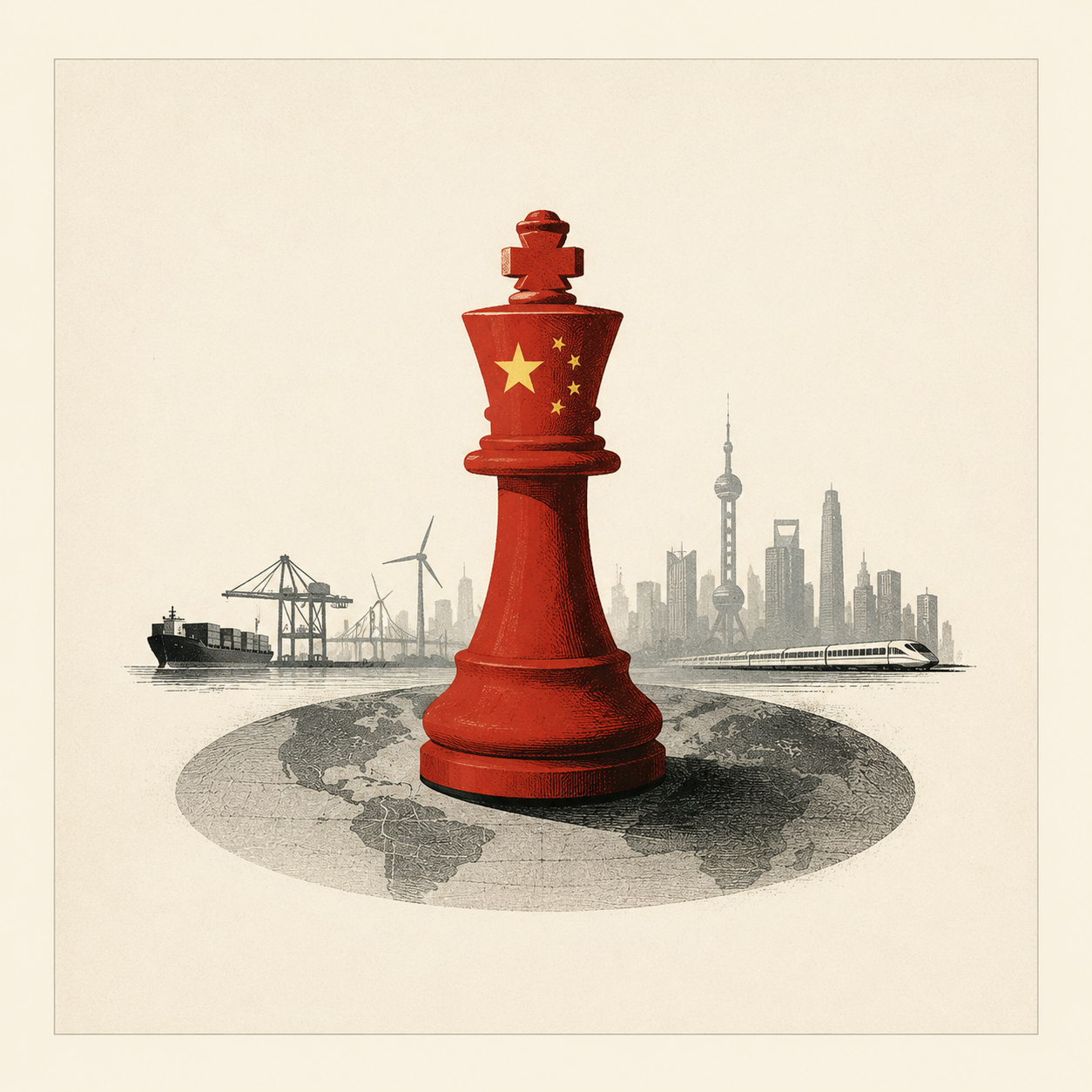
China’s foreign policy in 2026 reflects a familiar but evolving pattern: outward confidence paired with internal caution. As global tensions remain elevated—from trade fragmentation to regional security disputes—Beijing is attempting to project stability while tightening control over the risks it cannot fully manage.
The result is not a dramatic shift in direction, but a more disciplined and selective form of engagement with the world.
A Return to Controlled Global Engagement
After years of uncertainty in global markets and shifting alliances, China has gradually resumed a more structured diplomatic posture. High-level engagements with Europe, the Gulf states, and parts of Southeast Asia suggest a renewed effort to stabilise trade relationships without fundamentally altering strategic priorities.
This approach is less about expansion than risk management. Beijing is prioritising predictable economic corridors, particularly in energy and infrastructure, while avoiding deeper exposure to politically volatile regions.
The underlying objective remains unchanged: preserve access to global markets without compromising domestic control.
The Economy Shapes the Strategy
China’s geopolitical positioning is increasingly constrained by domestic economic realities. Slower growth, persistent weakness in the property sector, and cautious consumer sentiment have all reinforced the need for external stability.
As a result, foreign policy is being calibrated with a sharper economic lens. Trade diplomacy now prioritises supply-chain security, energy reliability, and technological self-sufficiency.
In practice, this means strengthening ties with resource-rich partners while reducing vulnerability to Western-controlled chokepoints in finance and technology.
Technology Competition and Strategic Decoupling
Nowhere is the tension between cooperation and competition more visible than in technology. The United States’ continued restrictions on advanced semiconductor exports have accelerated China’s push for domestic substitution.
Beijing’s response has been twofold: heavy state investment in key industries and selective openness to foreign capital where it does not compromise strategic autonomy.
Rather than full decoupling, the global system is drifting toward fragmented interdependence—a structure in which China remains deeply embedded, but increasingly on its own terms.
The Indo-Pacific and Managed Rivalry
In the Indo-Pacific, China continues to assert its interests through a combination of military modernisation, maritime presence, and economic statecraft. Yet recent signalling suggests an effort to avoid uncontrolled escalation with the United States and regional powers.
The emphasis is on managed rivalry rather than open confrontation. Diplomatic channels remain active even as strategic competition intensifies beneath the surface.
For neighbouring states, this creates a familiar dilemma: benefiting from Chinese economic engagement while hedging against its strategic reach.
Belt and Road in a More Cautious Phase
The Belt and Road Initiative (BRI), once the centrepiece of China’s global outreach, is now operating in a more restrained mode. Large-scale, high-risk infrastructure projects have given way to smaller, more targeted investments.
This shift reflects both financial caution and political recalibration. Several recipient countries have expressed concerns about debt sustainability, prompting Beijing to refine its approach toward more commercially viable and politically defensible projects.
The era of expansive lending is giving way to selective connectivity.