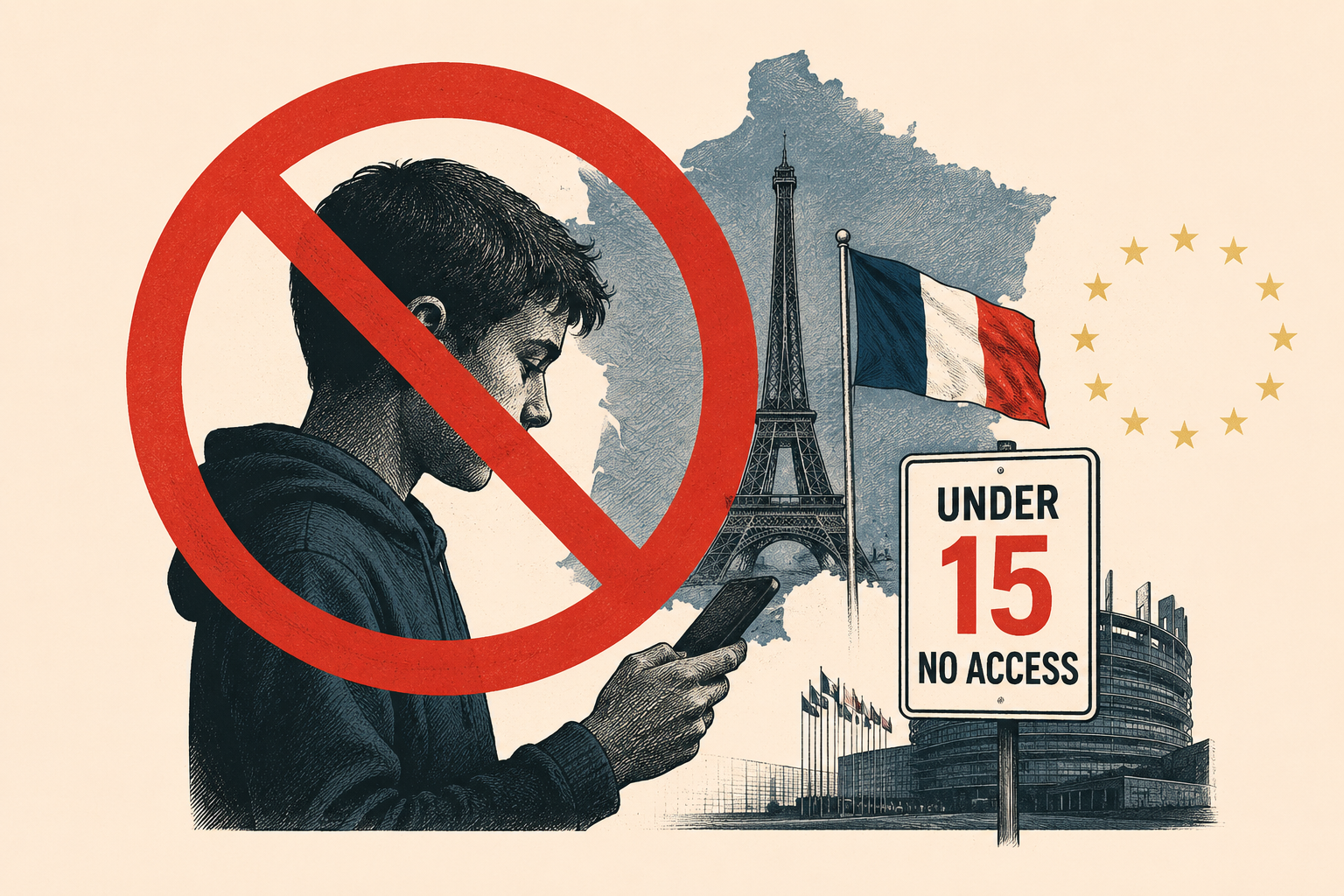
Landmark legislation signals a new era for child online safety and may set the standard for future EU digital policy.
France has taken a significant step toward strengthening online protections for children after Parliament approved legislation that would prohibit social media access for users under the age of 15.
If the measure clears constitutional review and is implemented as planned, France will become the first European Union member state to enforce a nationwide social media ban for children below the age threshold.
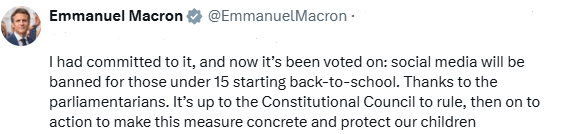
The legislation reflects growing concern among policymakers about the impact of social media on children’s mental health, online safety, and digital well-being. French President Emmanuel Macron has described the reform as a major step toward protecting young people online, with implementation expected to begin later this year following approval by the Constitutional Council.
Under the proposed framework, social media platforms would be required to introduce effective age-verification systems to prevent users under 15 from opening or maintaining accounts. Responsibility for compliance would rest primarily with technology companies rather than children or their parents.
A Turning Point for European Digital Policy
France’s decision is likely to have implications far beyond its borders.
Across Europe, governments have increasingly expressed concerns about children’s exposure to addictive platform designs, harmful content, cyberbullying, and excessive screen time. Several EU member states, including Greece and Spain, have already supported discussions on introducing stronger safeguards for minors using social media.
The European Commission has also begun testing age-verification technologies that could eventually provide a common framework for member states. France’s legislation may accelerate those efforts by demonstrating that stricter national regulation is politically achievable.
If successfully implemented, the French model could become a reference point for future EU-wide legislation, much as the General Data Protection Regulation (GDPR) influenced global privacy standards after its introduction.
Challenges for Technology Companies
The legislation places considerable responsibility on social media platforms to verify users’ ages accurately while respecting privacy rights.
Traditional age checks based solely on self-declared birth dates are widely regarded as ineffective. Instead, companies may need to adopt more sophisticated verification methods using digital identity services, secure age-estimation technologies, or government-approved verification systems.
This presents both technical and legal challenges. Platforms must balance child protection with user privacy, data security, and compliance with European data protection laws.
Technology companies are also likely to face increased regulatory scrutiny as governments demand stronger safeguards for younger users.
Could Other Countries Follow?
France is unlikely to remain an isolated case.
Governments around the world are reassessing how social media platforms affect children and adolescents. Australia has already adopted legislation requiring major platforms to remove underage accounts or face significant financial penalties, while several European governments are considering similar restrictions.
As evidence linking excessive social media use to mental health concerns continues to influence public policy debates, additional countries may introduce comparable legislation over the coming years.
What It Means
France’s move represents more than a national policy change. It signals a broader shift in how governments view the responsibilities of digital platforms and the protection of children online.
Whether the French model proves effective will depend on the reliability of age-verification systems, public acceptance, enforcement, and legal scrutiny. However, the legislation is already shaping the European conversation on digital regulation and could become one of the most influential technology policy developments in recent years.
For technology companies, policymakers, parents, and users alike, France’s decision may mark the beginning of a new phase in the regulation of social media across Europe.

